
Our Tree Sale is Closed!
Thank you for a great season, and we will see you next year.
Every spring, people across Mille Lacs County roll up their sleeves and plant new life in the ground — from small backyards to wide open fields. The Mille Lacs Soil and Water Conservation District’s annual Tree Sale is here to help make that happen. Each year, we offer trees and shrubs for anyone who wants to plant for the future — whether that’s to bring back songbirds, create a windbreak, or simply watch something grow.
Planting trees is one of the simplest ways to care for your land. Their roots hold the soil in place, keeping it from washing away in heavy rain. They help clean and store water underground, provide shelter and food for wildlife, and add beauty and shade around your home.
We choose species that grow well in our local soils and weather — hardy native trees and shrubs that will thrive for years to come. We are also happy to work with you one-on-one to go over the best choices for your needs and sites.
Our seedlings are sold bare-root, in easy-to-handle bundles of 25. They’re small now, but with a little care, they’ll grow quickly and make a lasting difference on your land and in your community.
Our tree sale is closed. Thank you for a great season, and we hope to see you next year!
Planting trees and shrubs the right way makes all the difference in helping them grow strong, healthy, and long-lasting. Proper planting ensures roots can establish well, reduces stress on the plant, improves survival, and sets the stage for a thriving landscape that benefits wildlife, your property, and the environment.
Whether you’re new to planting or a seasoned gardener, our easy-to-follow guides will help you plant with confidence and care.
How to Plant a Bareroot Seedling
At Mille Lacs SWCD, we offer a variety of trees and shrubs for your property. Each type of plant has its own strengths depending on soil, sun exposure, and the role you want it to play on your land.
We place a special emphasis on native species. Native trees and shrubs are naturally adapted to our local soils, climate, and wildlife. They provide food and shelter for birds, insects, and other wildlife, and they generally require less water and care once established, making them a resilient and environmentally friendly choice.
Some species in our list are marked with a ★ — these are anticipated to be climate-ready, meaning they are expected to thrive under the conditions of our future climate. Learn more about climate-ready species from the University of Minnesota Extension Office.
Watch this webinar on selecting the best trees for your property!
Small to medium-sized woody plants, usually with multiple stems. Shrubs are versatile for creating hedges, providing wildlife habitat, stabilizing soil, and adding seasonal color to your landscape.
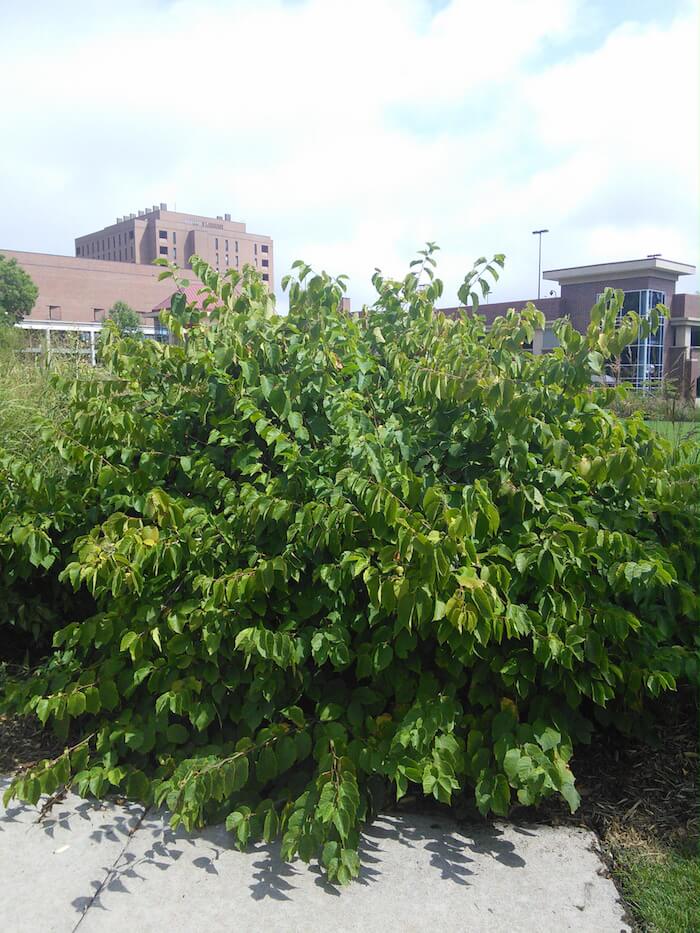
Corylus americana
American Hazelnut is a medium to large shrub commonly found along woodland edges and as an understory species among oaks. It grows in a wide range of soils and is tolerant of dry sites. The shrub produces edible nuts that are enjoyed by both humans and wildlife, making it a valuable species for habitat and food.
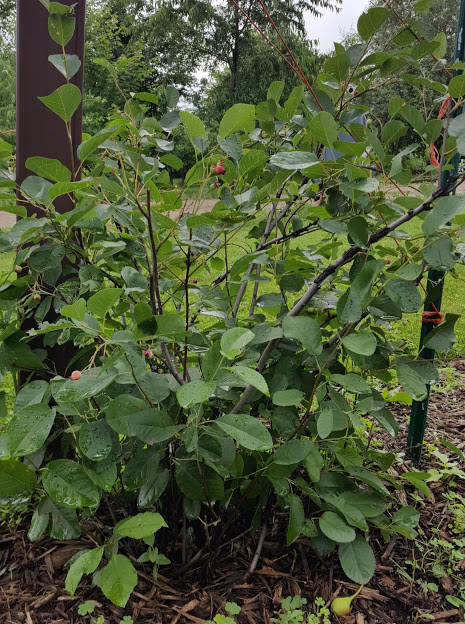
Amelanchier alnifolia
Juneberry is a small shrub, typically growing 6–9 feet tall, with white blossoms appearing in early May. It produces sweet, edible berries in July that are used for pies and jelly. Juneberry grows in open habitats, forest edges, and along stream banks or lakeshores, tolerating both drought and spring flooding while preferring moist, well-drained soils.
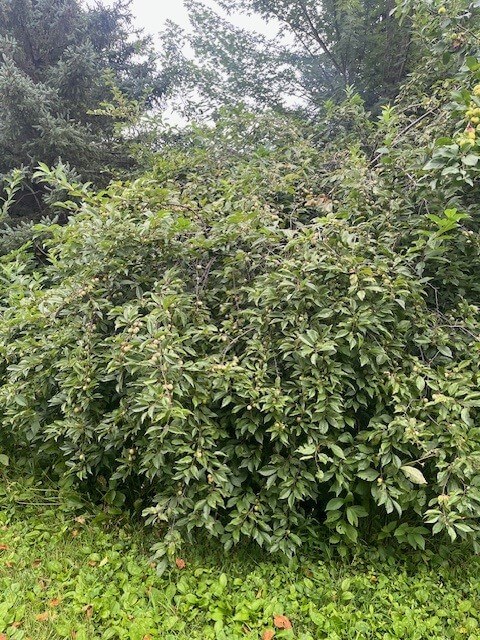
Prunus americana
American Plum is a fast-growing, long-lived shrub that forms dense thickets providing excellent cover for birds and wildlife. Showy white flowers bloom in May, followed by edible fruit that ripens in late summer. It grows well in sandy soils but adapts to many soil types and habitats, including floodplains, windbreaks, and shorelines.
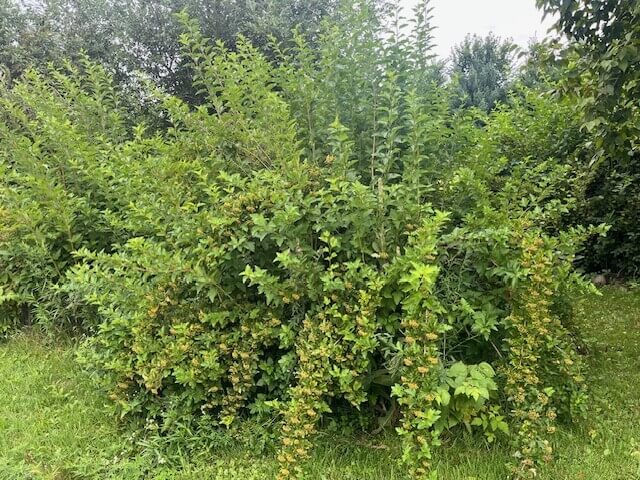
Physocarpus opulifolius
Ninebark is a large shrub with arching branches that provide excellent wildlife cover. Its distinctive bark peels in thin layers, revealing red wood beneath. White flowers attract pollinators such as bees and butterflies, and the seeds are eaten by birds including finches, chickadees, and grouse. Ninebark grows quickly and is drought tolerant, commonly found in upland woods, bluffs, and riverbanks.
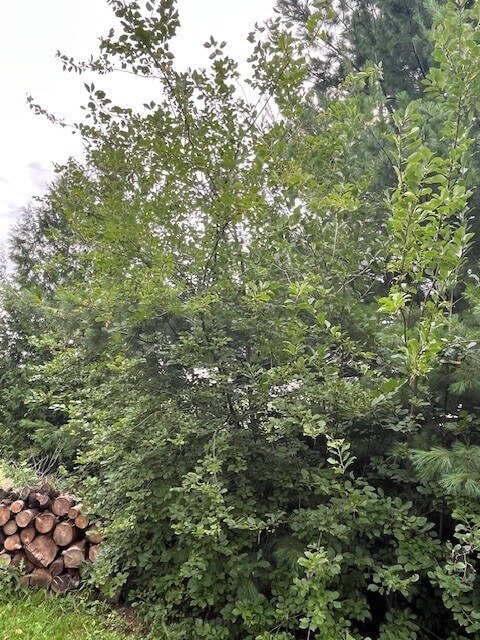
Prunus virginiana
Chokecherry is a large shrub or small tree that serves as an food source for birds and wildlife. White, bottlebrush-shaped flowers bloom in spring, followed by dark fruit commonly used in jams and jellies. Though slow growing, chokecherry is adaptable and typically found along forest edges or in open-canopy oak, birch, and aspen forests.
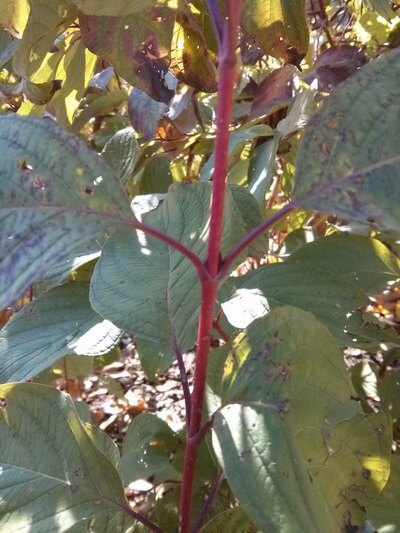
Cornus sericea
Redosier Dogwood is a medium-sized, spreading shrub valued for both wildlife habitat and visual interest. It produces white flowers followed by pale berries that are eaten by birds. Bright red stems stand out in winter, making it attractive year-round. This shrub grows in most soil types and is especially effective for shoreline erosion control due to its extensive root system and tolerance of wet soils.
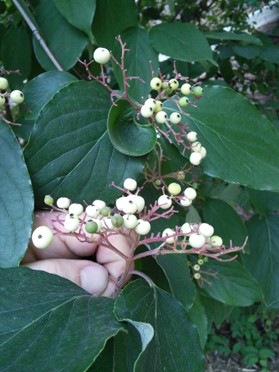
Cornus racemosa
Gray Dogwood is a medium-sized shrub commonly found along woodland edges and open forests. It produces small white flowers in late spring followed by white berries that are eaten by birds. This adaptable shrub tolerates a range of soil types and moisture conditions and provides good wildlife cover in naturalized plantings.
Broad-leaved trees that lose their leaves each fall. Deciduous trees provide shade in summer, allow sunlight through in winter, and support a variety of wildlife. They are ideal for creating windbreaks, improving soil health, and enhancing property value.
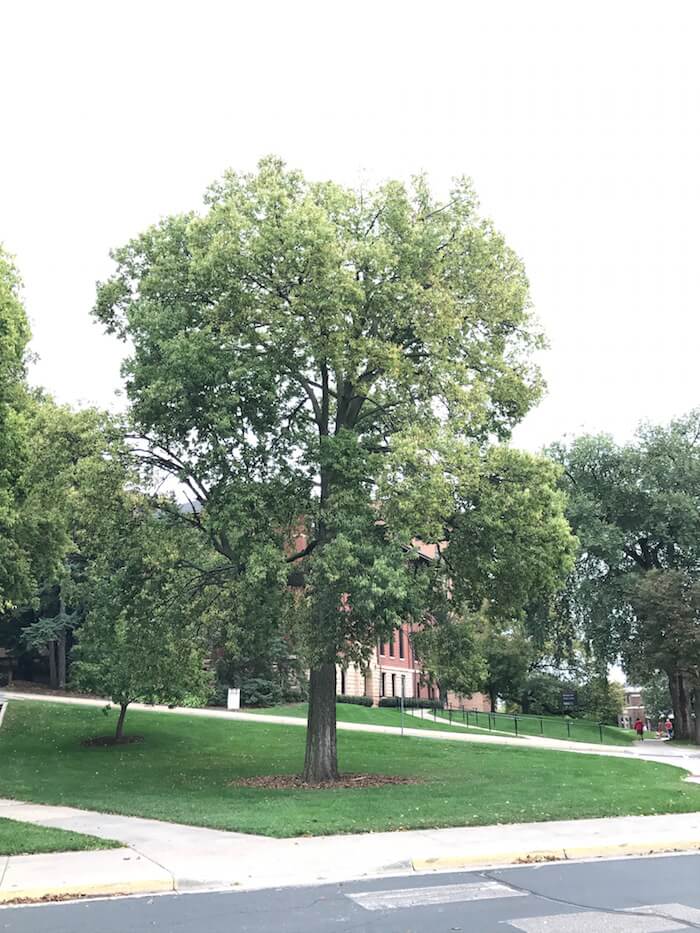
Celtis occidentalis
Hackberry is a medium to large shade tree, 40–75 feet tall, with grey-brown, corky bark. It grows best in moist, well-drained soils but tolerates a wide range of conditions. Small berries ripen in September and can persist into winter, providing food for birds and wildlife.
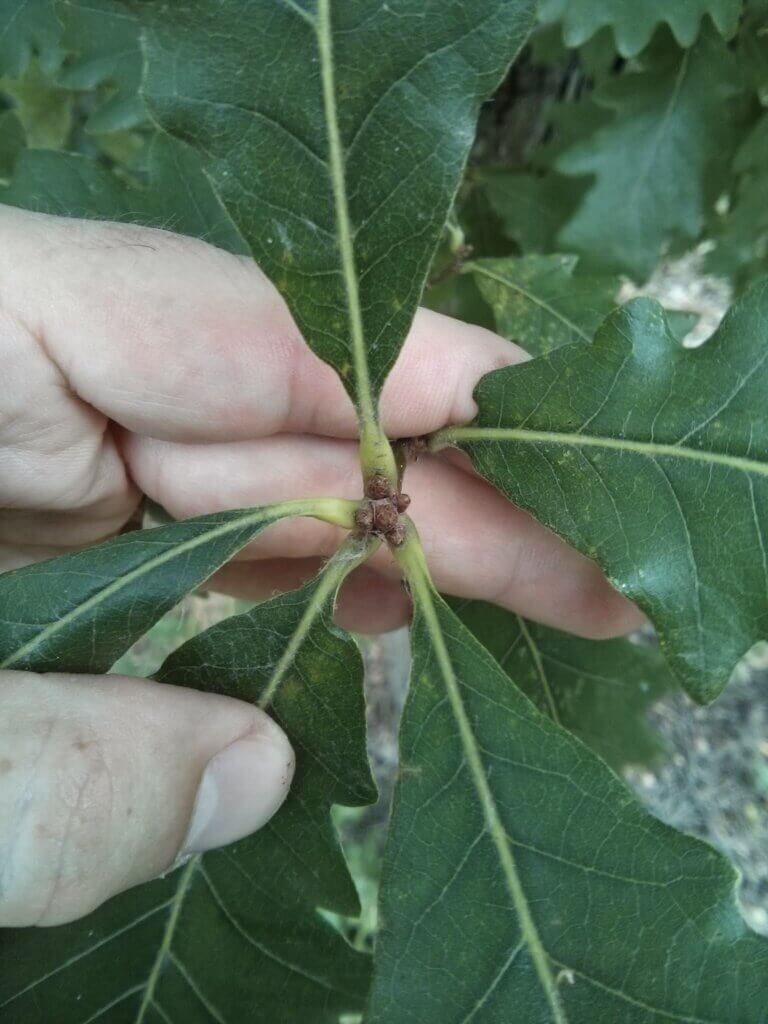
Quercus bicolor
Swamp White Oak is a medium to large tree that grows up to 65 feet tall with a rounded crown. It thrives in moist soils and is moderately shade-tolerant. Producing acorns that feed wildlife, it is slow-growing but long-lived, making it a resilient and lasting addition to landscapes.
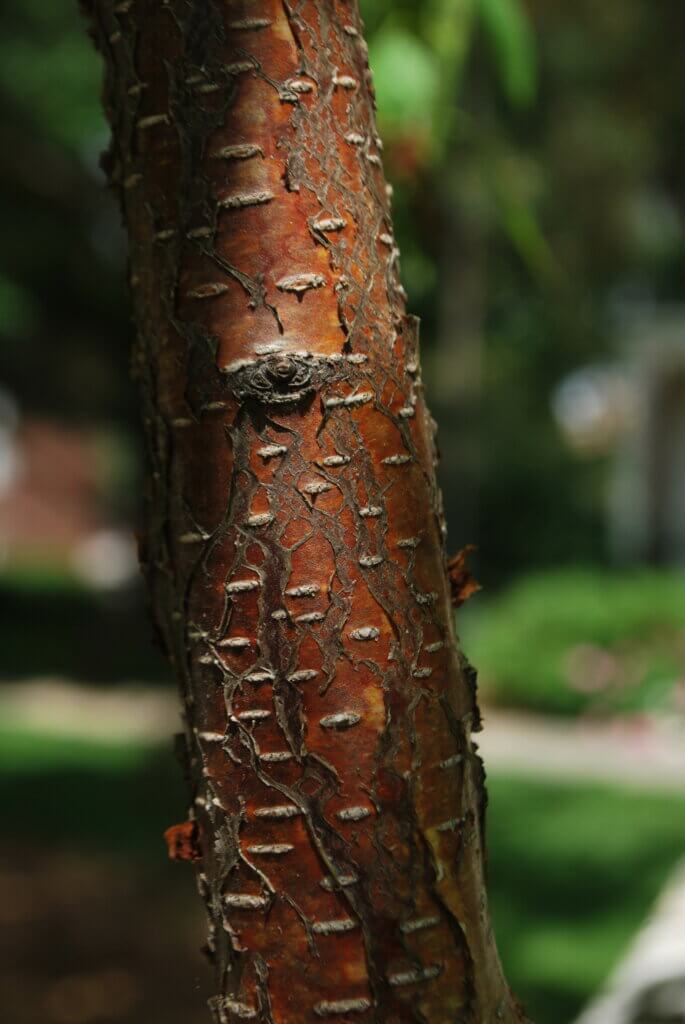
Betula papyrifera
Paper Birch is a medium to tall tree with a narrow crown and white, peeling bark. It prefers cool, moist, well-drained sites and full sun for seedlings. Often found along lakes and rivers, Paper Birch can decline during drought but adds striking seasonal beauty to landscapes.
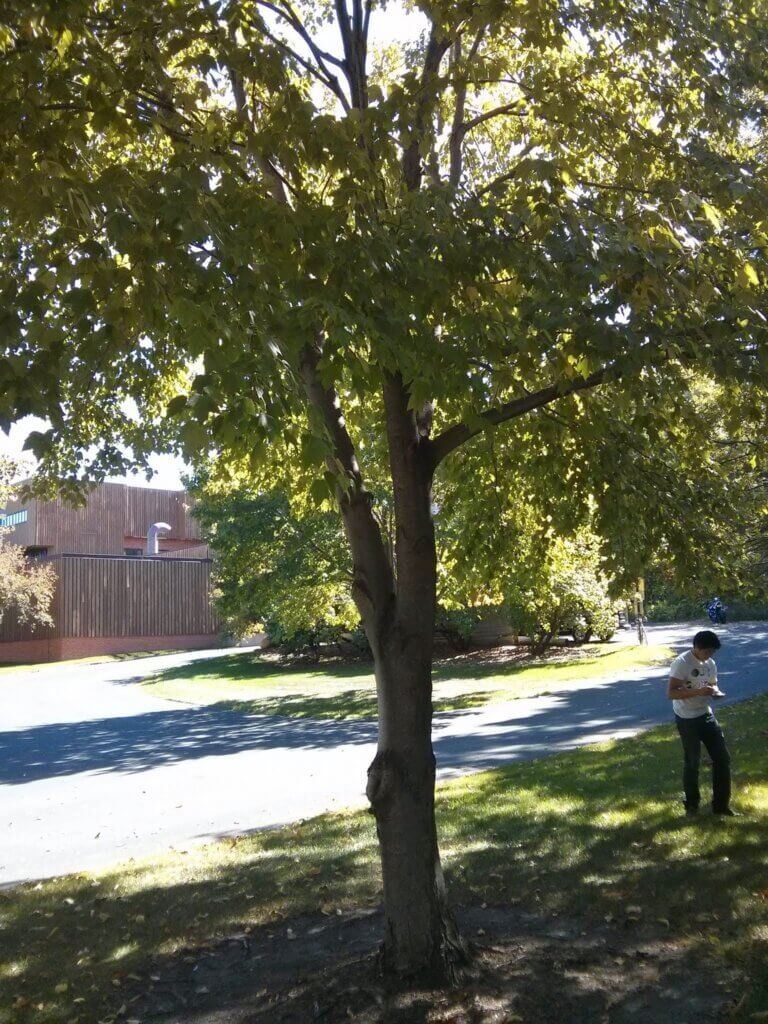
Acer rubrum
Red Maple is a medium to fast-growing tree that tolerates a range of soils and moisture conditions, including seasonal flooding. Its leaves turn bright red in fall, and seeds germinate easily. Though relatively short-lived, Red Maple provides quick shade and supports wildlife.
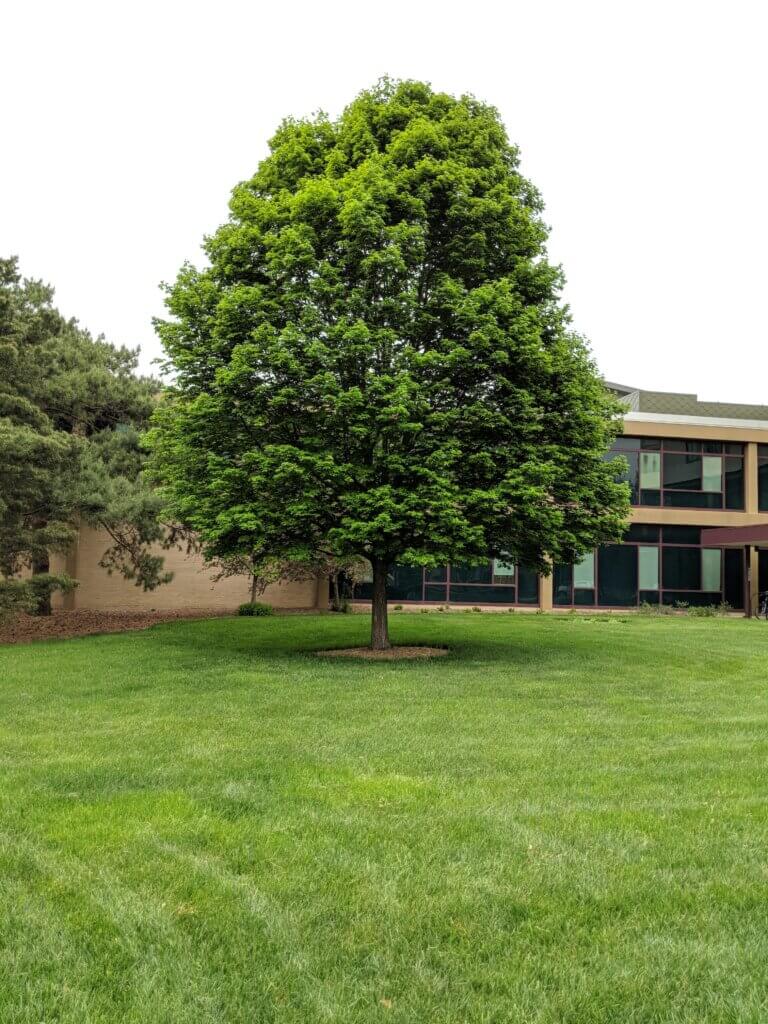
Acer saccharum
Sugar Maple is a large tree with a dense canopy and fall color ranging from yellow to bright orange. It prefers fertile, well-drained soils with consistent moisture and does not tolerate compacted or salty soils. Slow-growing and sensitive to flooding, it is valued for its sap, which can be made into syrup.
Trees and shrubs that retain their foliage year-round. Evergreens provide privacy, shelter from wind, and consistent habitat for wildlife throughout all seasons. They are especially valuable for winter landscapes and stabilizing soil on slopes.
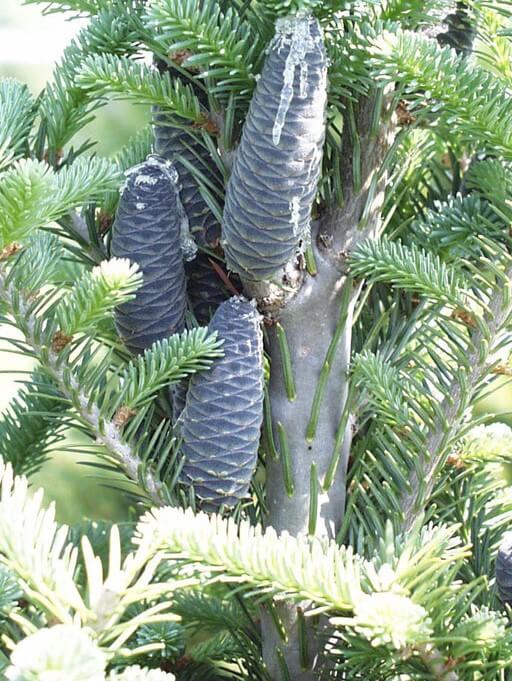
Abies balsamea
Balsam Fir is a medium to large conifer often grown as a Christmas tree for its symmetrical, pyramid shape and soft, fragrant needles. It thrives in cool, damp sites with moist soils and prefers full sun but tolerates some shade. The tree produces large, upright cones and provides important shelter for wildlife.
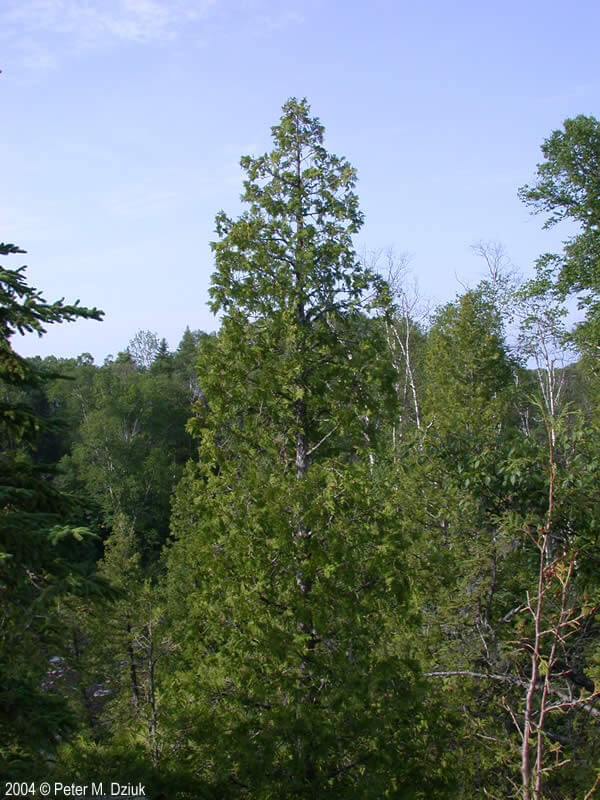
Thuja occidentalis
White Cedar is a mid-sized conifer with a cone-shaped crown and soft, fragrant, fan-like leaves. It grows naturally in peat swamps and moist uplands, and can appear on rock outcrops and lakeshores, though often stunted there. Shade-tolerant saplings make it useful for windbreaks, snow fences, and other shelter plantings.
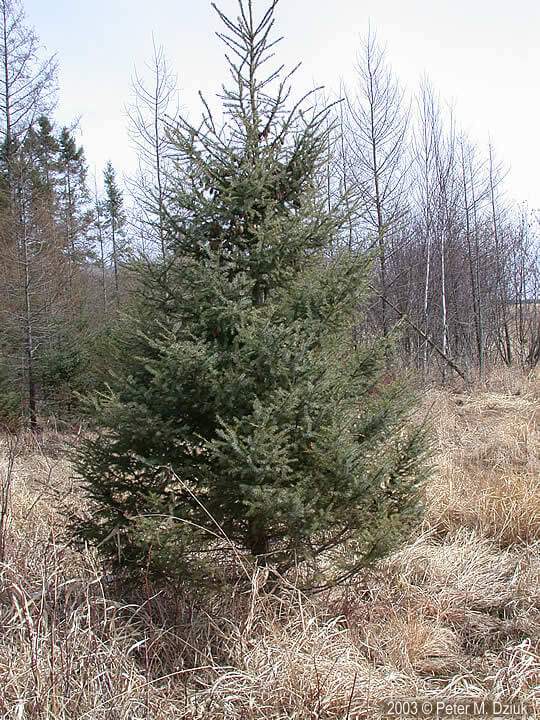
Picea mariana
Black Spruce is a small, slender conifer with drooping branches and short, hairy twigs. It grows naturally in wetlands but can also thrive on upland soils. Shade tolerant and long-lived, it provides cover, nesting, and browse for wildlife. Native to northeastern Minnesota, it is widely planted across the state.
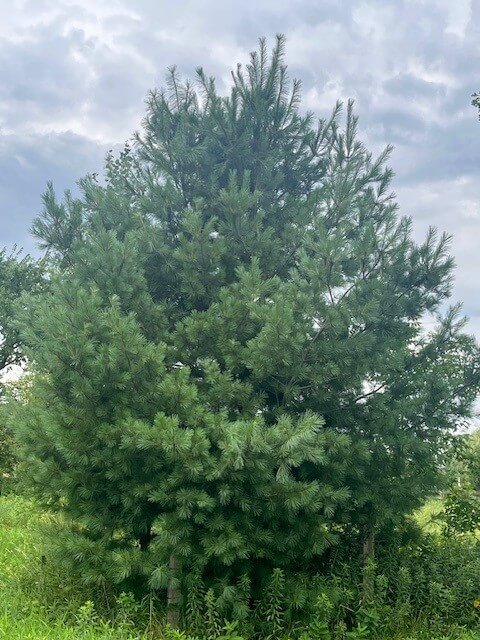
Pinus strobus
White Pine is a tall, fast-growing conifer with long needles in bundles of five. It grows in a variety of soils, often with Red Pine, Jack Pine, Oaks, and Birch. Populations in Minnesota have declined due to blister rust, deer, and logging. White Pine provides food for birds, transplants easily, and is valued in windbreaks and snow fences.
Pinus strobus
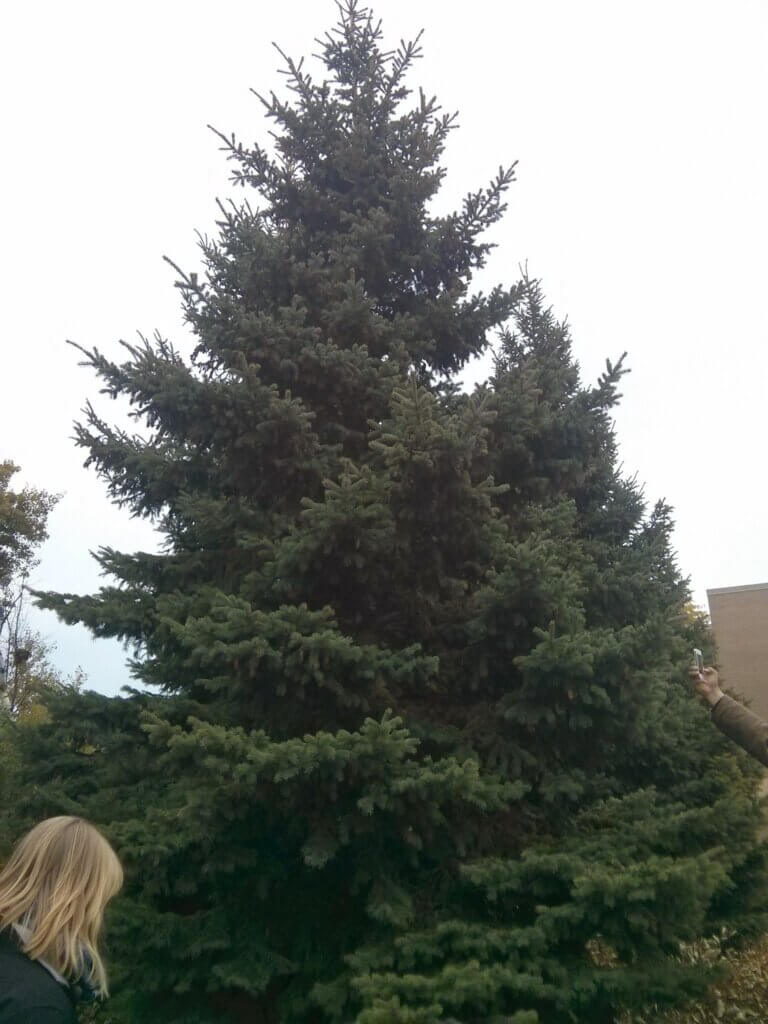
Picea glauca
White Spruce is a large, long-lived conifer with branches that reach the ground, offering excellent windbreak and wildlife cover. It grows in a variety of soils, tolerates shade, and resists disease and deer browse. White Spruce is also an important commercial tree in Minnesota, used for lumber, pulpwood, and Christmas trees.
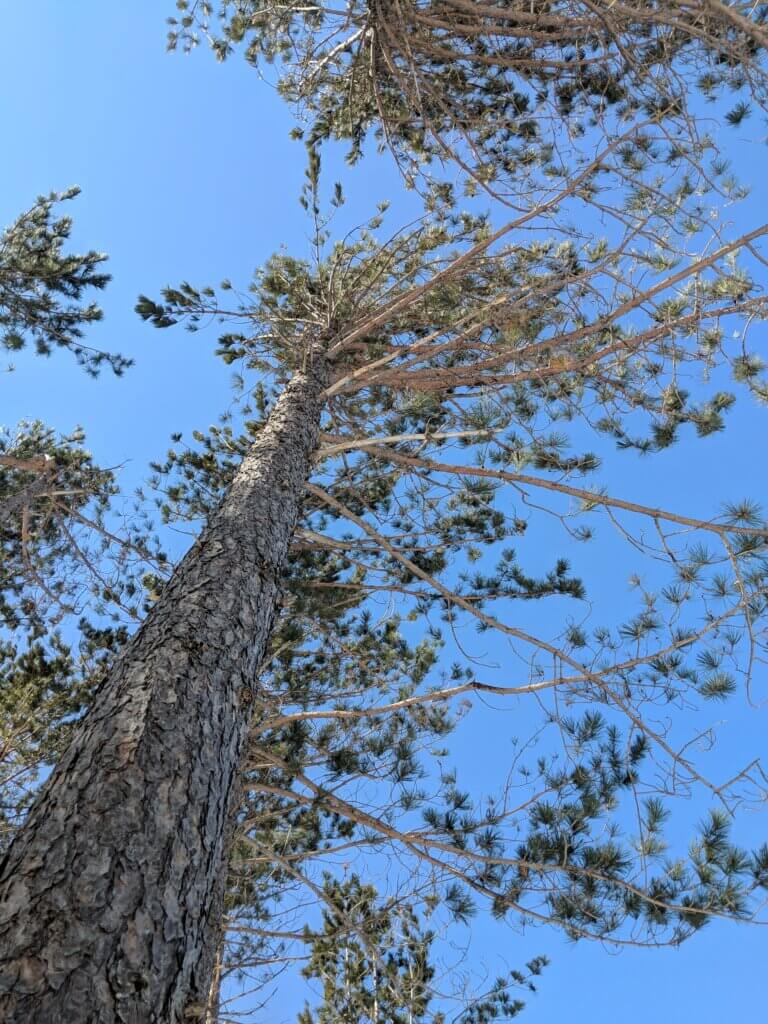
Pinus resinosa
Red Pine, Minnesota’s state tree, is a tall, slender conifer with distinctive gray-barked plates marked by reddish patches. It grows best on dry, sandy soils and is used for erosion control, windbreaks, and recreational plantings. Disease- and insect-tolerant, Red Pine provides long-term value to landscapes and habitats.
“
Join Our Tree Sale Email List
If you’ve already received our tree sale emails in past years, there’s no need to sign up again — you’re already on the list! Only fill out the form if your email address has changed.