Call us at 320-983-2160 or email susan.shaw@millelacsswcd.org or lynn.gallice@millelacsswcd.org to learn more about wetland regulations and information.
Why Wetlands Matter
Before European settlment, studies estimate that Minnesota had over 20 million acres of wetland. Today, that number has been cut in half to roughly 10.6 million acres.
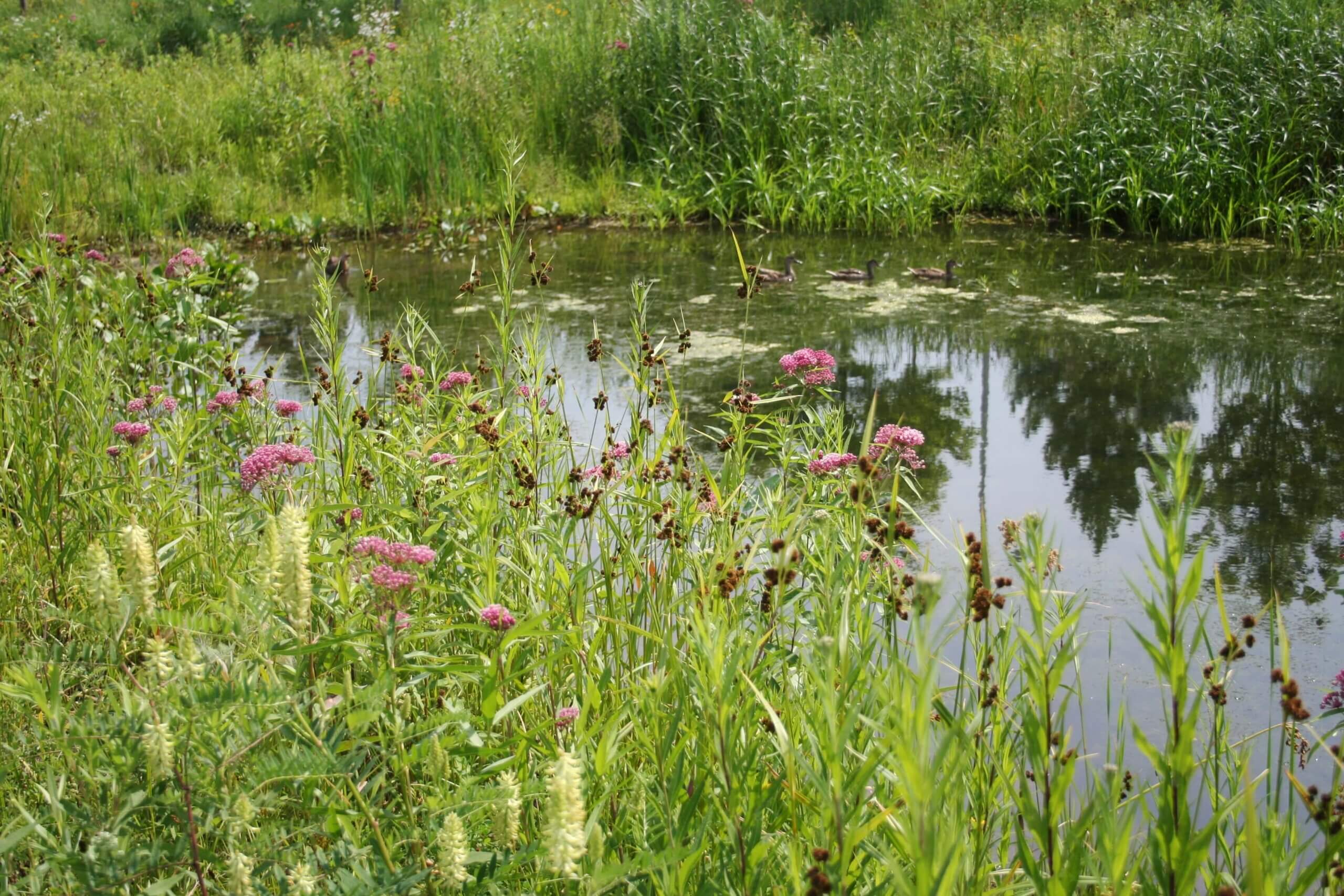
Wetlands are important ecosystems. They hold water, providing for natural water quality improvements by filtering nutrients and sediment that might otherwise pollute and clog waterways. They provide flood protection and shoreline erosion control, and are home to many different species of fish and wildlife.
Minnesota has 8 different types of wetlands
Seasonally Flooded Basin or Flat – Type 1 has “seasonal” wetness, but usually is well-drained during much of the growing season. The vegetation here can vary based on the season and duration of flooding, but can range from bottomland hardwoods to herbaceous plants. These types are commonly found in upland depressions and floodplain forests. For a full article on Seasonally Flooded Basins, please follow this link Seasonally Flooded Wetland Article
Wet Meadows – Type 2 are saturated during the majority of the growing season, have very little visual water, but soil is waterlogged. You will find grasses, sedges, rushes and an assortment of broad-leaved plants. These wetlands are sneaky, filling in shallow basins or farmland sags, also they can border shallow marshes. For a full article on Wet Meadows, please follow this link Wet Meadows Article
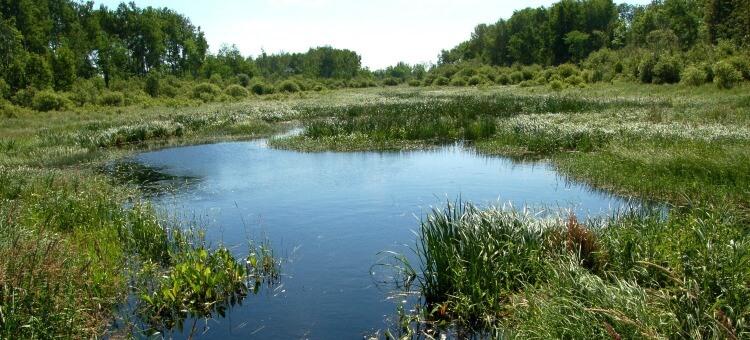
Shallow Marshes – Type 3 are waterlogged during the early stages of the growing season and covered with 6 plus inches of water. You will find grasses, bulrush, spikerush and other marsh plants (cattails, arrowhead, pickerelweed). Shallow marshes may form by filling in basins or sloughs, or may border deep marshes on the landward side. (photo credit: Minnesota Department of Natural Resources) For a full article on Shallow Marshes, please follow this link Shallow Marshes Article
Deep Marshes – Type 4 are formed along the edges of lakes and streams. You will find grasses, sedges, rushes, cattails, reeds and wild rice. Open areas may have waterlily, pondweed, or coontail. These marsh plants can act to slow down water, sometimes allowing for nutrient enriched sediment to be deposited, or by acting as a filter for excess nutrients. There is standing water of 6 inches to 3 feet during the growing season. (photo credit: MN DNR) For a full article on Deep Marshes, please follow this link Deep Marshes Article
Shallow Open Water Wetlands – Type 5 includes shallow ponds and reservoirs that are less than 10 feet deep. You will find pondweed, naiad, coontail, watermilfoil, duckweed, waterlily and spatterdock. For a full article on Shallow Open Water Wetlands, please follow this link Shallow Open Water Article
Shrub Swamps – Type 6 have peaty soils and are dominated by shrubs. Shrub swamps receive water from both surface and groundwater sources and occur along slow-moving streams, drainage depressions and floodplains. You will find alder, willow, buttonbrush and dogwood. (photo credit: Minnesota Department of Natural Resources) For a full article on Shrub Swamps, please follow this link Shrub Swamps Article
Wooded Swamps – Type 7 have soils that drain poorly and are tree dominated with hardwoods and conifers. Most common trees you will find are green ash, northern white cedar and silver maple.

Check back soon for more information.
Know the law before you work on your wetlands.
Most wetlands in Minnesota are protected by State and/or Federal law. Minnesota’s primary wetland protection law is Wetland Conservation Act. The law is implemented by local governments, the Minnesota Board of Soil and Water Resources provides assistance and oversight, and the Department of Natural Reosurces provides enforcement.
- The state law applies to all wetlands, including those on private property, to achieve “no net loss” of wetlands.
- In general, wetland protection laws regulate activities in or near wetlands that can negatively affect the wetland through draining, filling, or excavating.
- There are some exemptions contained within State law for certain activities.
What you should know
It can be very difficult to identify wetlands and wetland regulations can be quite complex. Some examples of projects that could potentially affect wetlands include:
- Filling a low area of residential lot for a building or lawn
- Tiling wet areas of cultivated fields
- Digging a pond in a low area
- Cleaning out an old ditch or improving an existing ditch
- Adding fill for a crossing of a stream or wet swale
Requirements
If there’s potential for your project to impact your local WCA regulatory authority before you start to work.
Contact the SWCD for general questions @ 320-983-2160
Contact the County for permission