You may be eligible to receive assistance for your projects.
Cost-share may provide technical, design, construction, and financial assistance to landowners within Mille Lacs County.
How would you like to keep your soil and water healthy? The SWCD is now able to offer financial incentives for landowners to do soil health practices that support clean water. If you have any interest in cover crops, nutrient management, prescribed grazing, no till, or conservation tillage, give us a call at 320-983-2160 or email Siena at siena.storm@millelacs.mn.gov
The current policy document can be found below.
Minnesota Buffer Law
Minnesota’s buffer law establishes new perennial vegetation buffers of up to 50 feet along lakes, rivers, and streams and buffers of 16.5 feet along ditches. These buffers will help filter out phosphorus, nitrogen and sediment. The deadline for implementation for buffers on public waters was November 1, 2017. The deadline for public ditches was November 1, 2018. The law provides flexibility for landowners to install alternative practices with equivalent water quality benefits that are based on the Natural Resources Conservation Service Field Office Technical Guide.
What is a buffer?
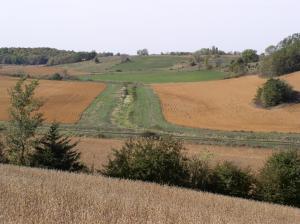
A buffer, also known as a riparian filter strip, is vegetated land adjacent to a stream, river, lake or wetland. Buffers help filter out phosphorus, nitrogen, and sediment, and are an important conservation practice for helping keep water clean. Studies by the Minnesota Pollution Control Agency show that buffers are critical to protecting and restoring water quality and healthy aquatic life, natural stream functions and aquatic habitat due to their immediate proximity to the water.
The information above is from the Minnesota Board of Water and Soil Resources: https://bwsr.state.mn.us/minnesota-buffer-law
What is our responsibility?
The Mille Lacs SWCD does compliance tracking of all parcels subject to the buffer law. All parcels in the county are to be reviewed within a 3 year timeframe. The SWCD will also conduct 25-50 random spot checks each year.
Learn about the Program
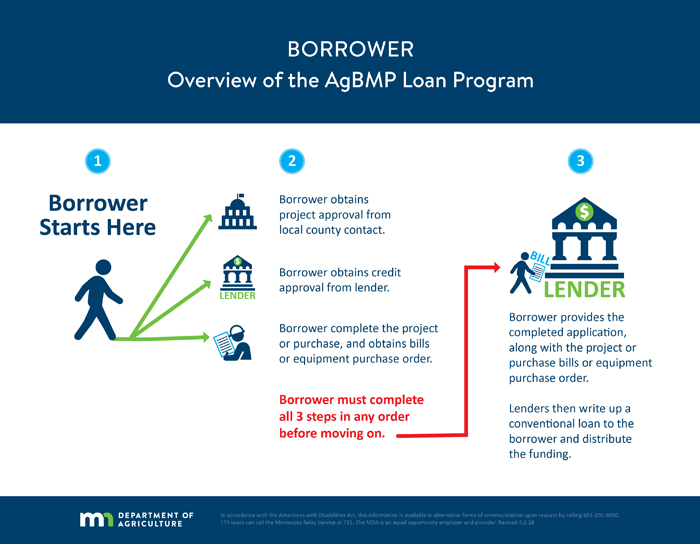
The AgBMP Loan Program is a water quality program that provides low-interest loans to farmers, rural landowners, and agriculture supply businesses. The purpose is to encourage agricultural Best Management Practices that prevent or reduce runoff from feedlots, farm fields, and other pollution problems identified by the county in local water plans. For more information on AgBMP Loan Program, click here.
Eligible activities include:
- Feedlot improvements
- Improved manure handling, spreading and incorporation equipment
- Terraces, waterways, streambank protection, sedimentation basins, wind breaks
- Conservation tillage equipment
- Repair of individual sewage treatment systems
- Sealing abandoned wells
Minnesota Agricultural Water Quality Certification Program
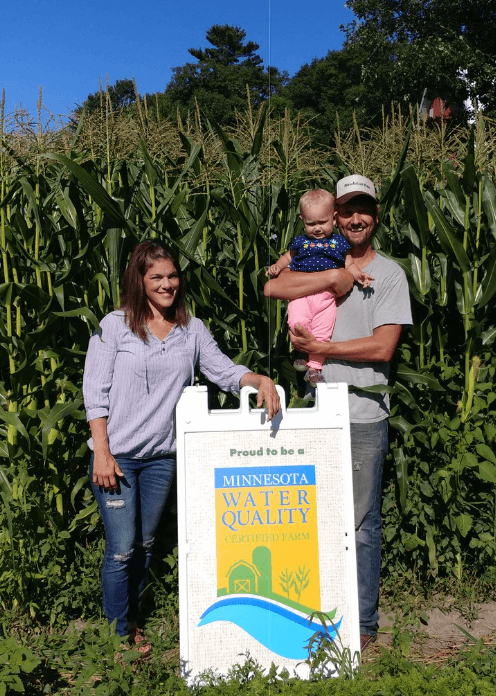
The Minnesota Agricultural Water Quality Certification Program (MAWQCP) is a voluntary opportunity for farmers and agricultural landowners to take the lead in implementing conservation practices that protect our water. Those who implement and maintain farm management practices will be certified and in turn obtain regulatory certainty for a period of ten years.
What would you receive?
- Regulatory certainty: certified producers are deemed to be in compliance with any new water quality rules or laws during the period of certificatoin.
- Recognition: certified producers may use their status to promote their buisness as protective of water quality.
- Priority for technical assistance: producers seeking certification can obtain specially designated technical and financial assistance to implement practices that promote water quality.
This information was taken from The Minnesota Department of Agriculture. For more information on this certification program, including the program application, click here.
To start the certification process, please call our office (320-983-2160)
Eligible Practices
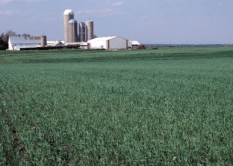
Cover Crops
Cover crops are a proven method of keeping water clean and your soil where you want it. Integrating cover crops into your fields has a variety of benefits. These plants cover exposed ground, reducing erosion and improving soil health. They also keep weeds down, increase biodiversity, and improve water availability.
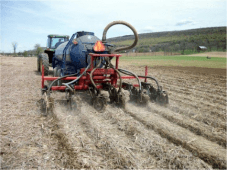
Nutrient Management
It’s important to manage the nutrients on your land. Lost nutrients from fertilizers or manure degrade water ways and negatively impact or ecosystems. By implementing a nutrient management plan, you can keep the nutrients where they will be doing the most good while also keeping your soil and waters healthy.
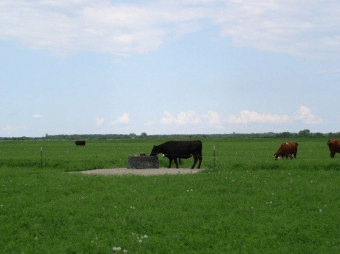
Prescribed Grazing
Controlling when, where, and how many animals are on the land is an excellent way to practice soil health. Cycling livestock through different pastures over a set amount of time allows for the off pastures to recover and regrow. Better grass and forage means better livestock production while also reducing soil erosion and conserving water.
No Till and Strip Till
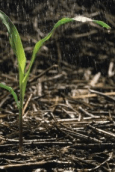
No till and strip till are great ways to get more while doing less. Save time, energy, and resources while also improving soil quality. By eliminating or reducing the amount of exposed earth, erosion by wind and rain decreases. This keeps your soil healthy and prevents the contamination of water ways.
Conservation Tillage
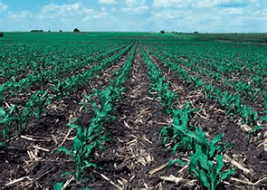
Leaving a percentage of crop residue on fields after harvest are good for soil health and future crops. Leaving stalks and leaves in the field reduces erosion, improves moisture retention, and feeds the healthy organisms that keep soils fertile.
Want to Learn More?
To learn more about sustainable agriculture, visit the Sustainable Agriculture Research and Education website.