
American Plum
$60.00Scientific Name: Prunus americana American plum can be single or multi-stemmed, usually between 10 and 25 feet tall. It produces white flowers in spring and small tart plums in the…
Showing all 5 results
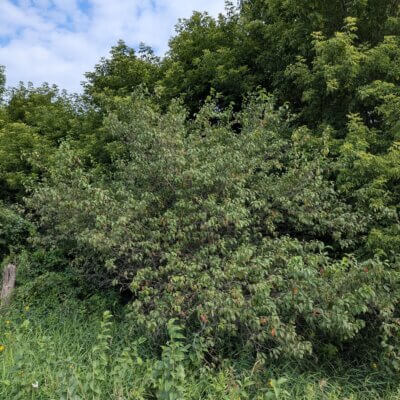
Scientific Name: Prunus americana American plum can be single or multi-stemmed, usually between 10 and 25 feet tall. It produces white flowers in spring and small tart plums in the…
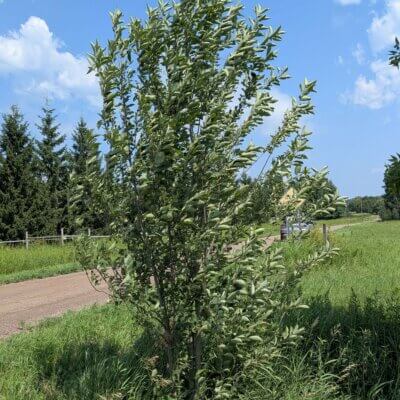
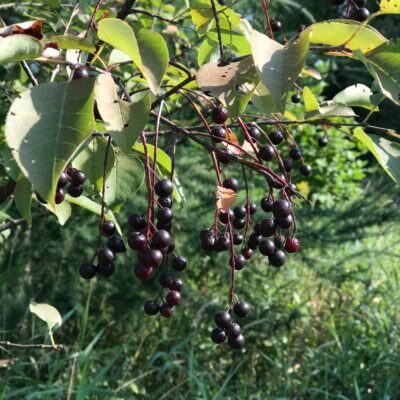
Scientific Name: Prunus virginiana
Chokecherry is a highly adaptable shrub of 20 to 30 feet, found across Minnesota. It prefers full sun to partial shade and is moderately shade tolerant. It grows quickly and can spread through underground rhizomes. Clusters of white flowers in the spring attract pollinators. Dark red fruits are produced from late summer to fall and are eaten by birds and other wildlife. Chokecherry is considered climate adapted due to its ability to grow in a variety of soil types.

Trees are sold in bundles of 25 seedlings.
Scientific Name: Amorpha fruticosa
False Indigo is a highly adaptable and low maintenance shrub, well-suited for shorelines with their extensive root systems and preference for wet soil. It grows between 3 and 12 feet tall and is multi-stemmed. Spikes of purple flowers bloom from June to July and are visited by bees and butterflies. As a legume, False Indigo fixes nitrogen in the soil, allowing it to survive in nutrient-poor soils. The shrub’s adaptability makes it well suited to adapt to Minnesota’s changing climate.
Trees are sold in bundles of 25 seedlings.
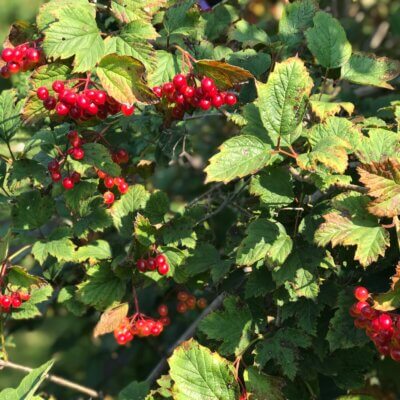
Scientific Name: Viburnum trilobum
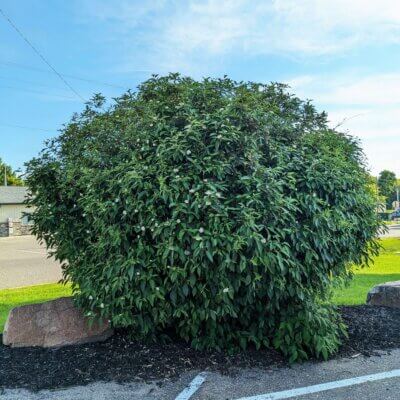
Highbush cranberry is a tall, multi-stemmed shrub of 9 to 12 feet. It prefers moist to wet soil but is tolerant of a variety of conditions including occasional flooding and road salts, making it climate ready. Highbush cranberry has white flowers in the spring and bright red fruits in the fall which are eaten by birds and other wildlife.
Scientific Name: Cornus sericea
Redosier dogwood is a fast-growing shrub of 5 to 9 feet, with distinctive red stems that stand out in wintertime. The shrub is tolerant of wet soil and flooding and is often used in shoreline restoration. It prefers full sun to partial shade and is fire tolerant. In spring, clusters of white flowers bloom and attract pollinators. Later, its fruits are eaten by birds and wildlife. Redosier dogwood is considered climate adapted due to its ability to grow in a variety of soil types.
End of content
End of content