-
$60.00
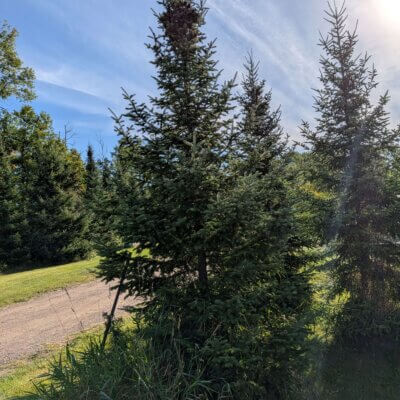
Scientific Name: Abies balsamea
Balsam fir is a midsize tree of 50 to 70 feet, found in the northern half of the state. It has a narrow pyramidal form and smooth gray bark, and can be differentiated from spruces by its upright cones and flat needles. Balsam fir prefers moist, acidic soil and tolerates compacted or wet soil. It is very shade tolerant but cannot tolerate drought or fire.
-
$60.00
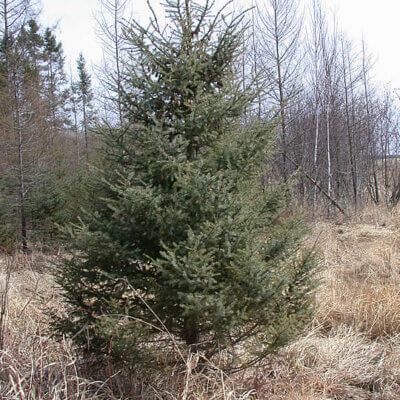
Scientific Name: Picea mariana
Black spruce is a slow growing, midsize tree of 30 to 50 feet. It has a narrow crown and drooping branches. Often found in bogs and swamps, black spruce can grow in acidic, nutrient-poor soil and is tolerant of wet areas and poor drainage. They typically retain their lower dead branches and can be susceptible to fire during drought.
-
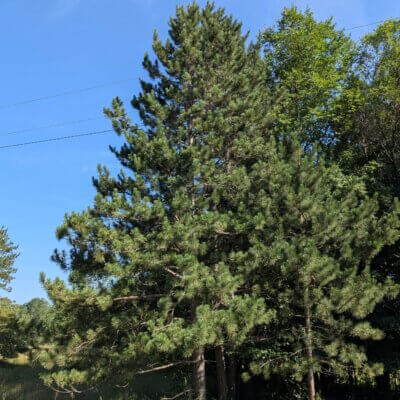
$60.00
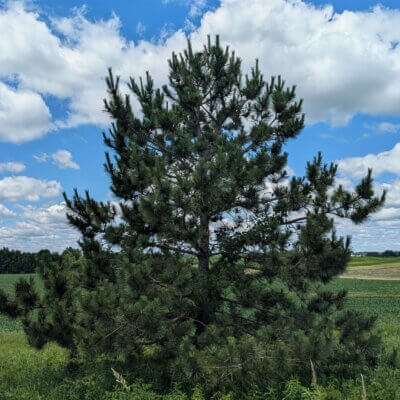
Scientific Name: Pinus resinosa
Red pine is a tall, straight-trunked tree of 60 to 80 feet. It often loses its lower branches as it grows, leaving a small crown at the top by maturity. The tree gets its name from distinct reddish patches on the scaley bark. It is shade intolerant and prefers sandy, drier soil. Red pine is long living, surviving up to 400 years.
-
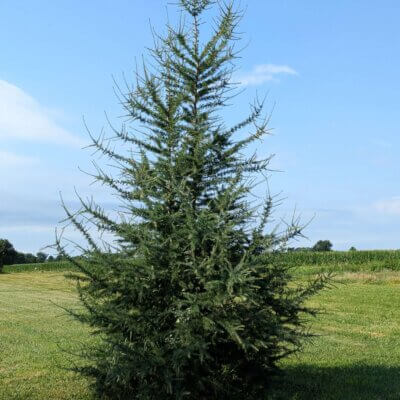
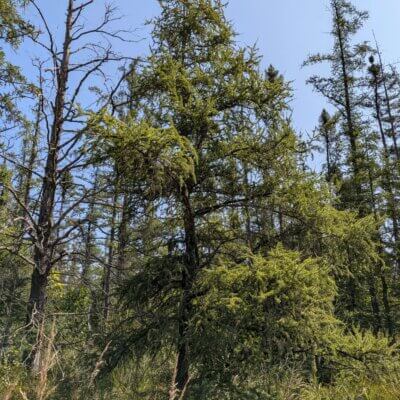
$60.00
Scientific Name: Larix laricina
Tamaracks are fast growing trees that reach between 40 and 80 feet tall. They are the only conifer in Minnesota that shed their needles annually, turning yellow in the fall before they drop. Native to swamps and bogs, Tamarack trees prefer moist to wet acidic soil. They prefer full sun and are not shade tolerant. Tamarack is considered climate adapted due to its ability to grow in harsh conditions.
-
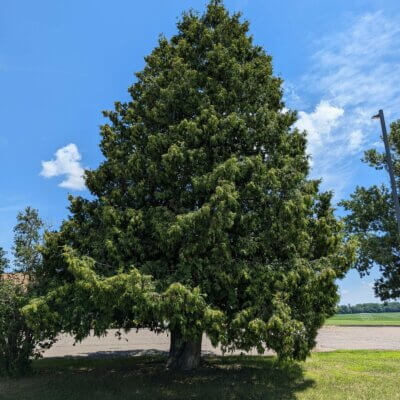
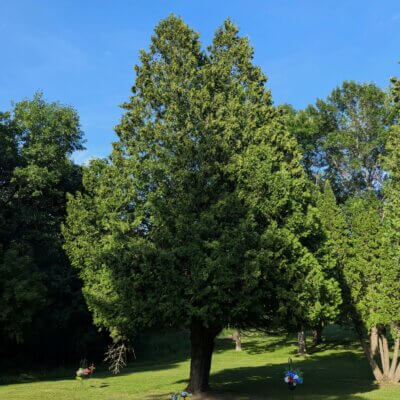
$60.00
Scientific Name: Thuja occidentalis
White cedar is a midsize tree, 40 to 60 feet tall, often with a divided trunk. It has shaggy bark and soft, flat needles and is commonly used ornamentally. White cedar is native to the northern half of the state and prefers colder areas. Common in swamps, white cedar grows in acidic, moist soil but can also tolerate dry sites. It prefers full sun to partial shade but is shade tolerant. White cedar is considered climate adapted due to its ability to grow in a variety of soil types.
-
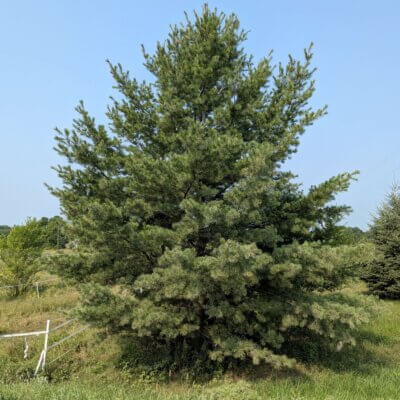
$60.00
Scientific Name: Pinus strobus
White pine is a large tree of 75 to 100 feet, with long cones and a fuller crown than red pine. White pine attracts a variety of wildlife as a source of food and shelter. It prefers acidic soil, full sun, and cool climates, and cannot tolerate clay or alkaline soil. White pine also tolerates seasonal flooding and is predicted to do well in future climate conditions.
-
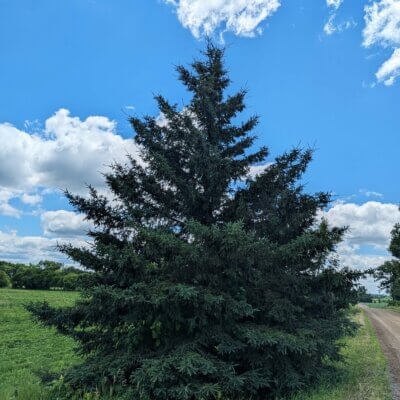
$60.00
Scientific Name: Picea glauca
White spruce is a narrow tree of 40 to 60 feet. Slow growing and long lived, it prefers full sun and favors colder climates. The tree gets its name from the waxy, white coating on its needles. White spruce is more tolerant than most spruces and can grow in a range of conditions, including dry soil or swamps and can tolerate alkaline and clay soil. It is moderately shade tolerant.
End of content
End of content